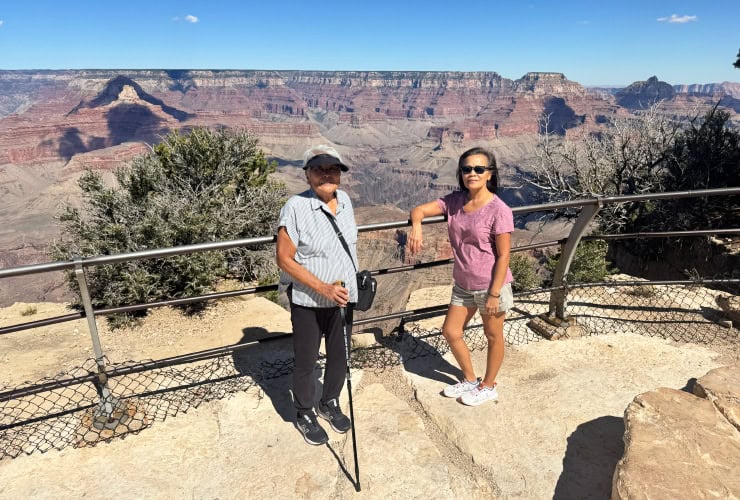
Many people have asked Ramie and I what it’s been like traveling with her 91-year-old Mother over the past year. While her mind and spirit are healthy, she does have some physical limitations, mostly related to stamina and speed. For international trips, we’ve been mostly choosing cruises which are uniquely suited for the elderly. We decided to push the envelope a bit and design a trip that allowed us more flexibility. Ramie and I had previously visited Sedona and Bryce Canyon and fell in love with this part of the country. After some research and planning we made the decision to see more of America’s Red Rock Country of Arizona and Utah.

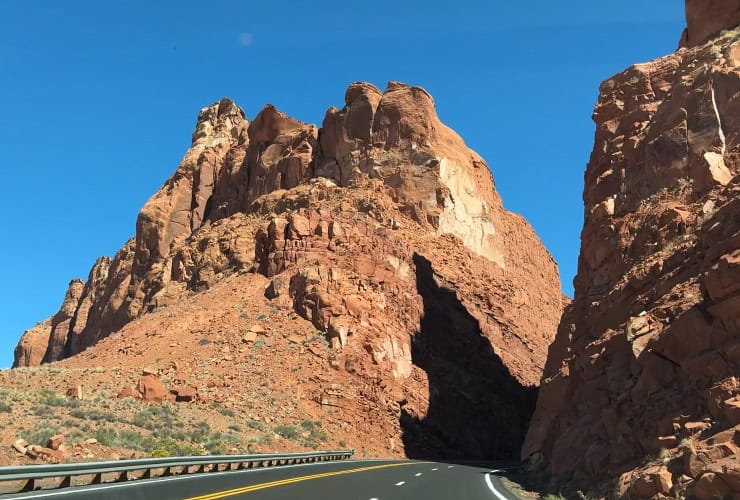
Of course, this meant taking on all the lodging and transportation planning ourselves to create an accessible experience we could all three enjoy. I’m happy to report that every place we visited had accommodations for seniors or was specifically designed for easy access, making this a perfect multi-generational adventure. To top it off, the natural beauty seen on our drives between each of our destinations was just as spectacular as the attractions themselves and could be enjoyed from the safety and comfort of our rented car.
Jump to a specific area.

Arriving in Phoenix late morning, we had some time to explore locally. Since we had visited the Desert Botanical Gardens a few years back, we opted for a short, relatively easy activity.
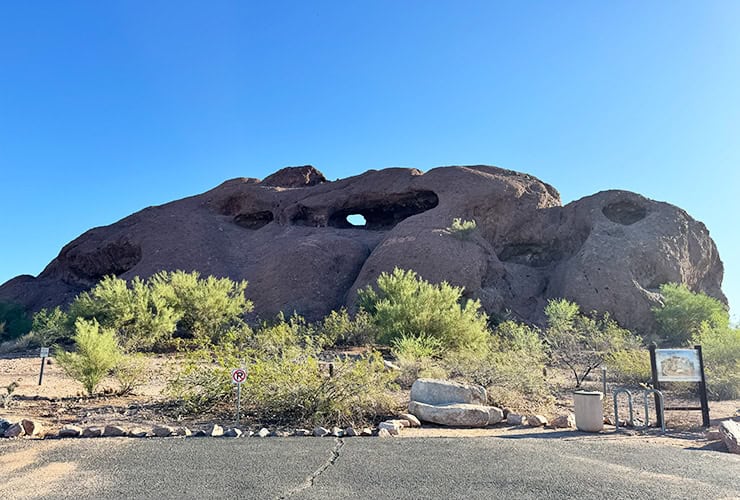
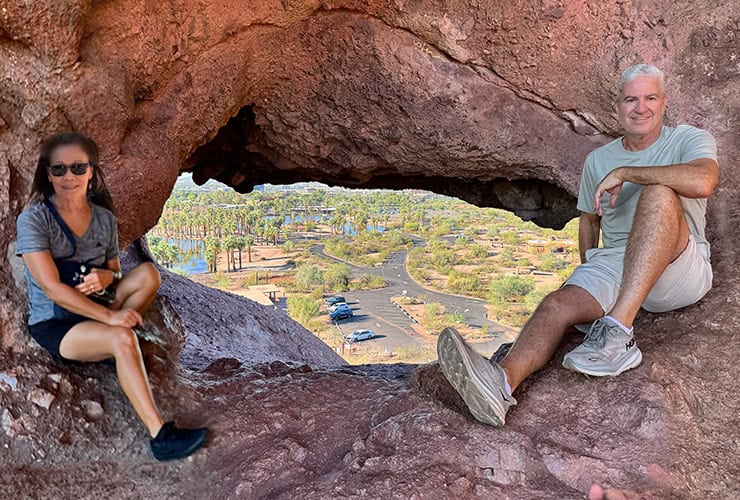
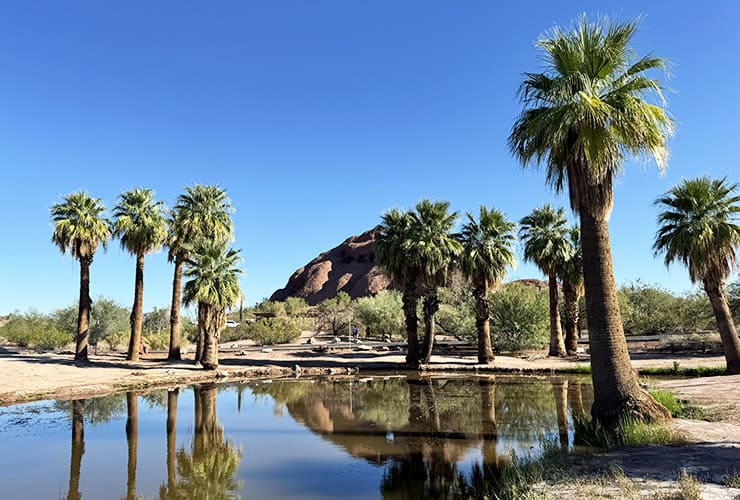
Hole in the Rock is one of Phoenix’s iconic natural phenomena—a sandstone butte with an eroded, eye-shaped hole near the top. Ramie’s Mom enjoyed the view from the parking lot while Ramie and I walked all around the rock. From the backside you can stroll right up to, and into, the hole itself for scenic views of the Phoenix skyline. The Papago Park below features a tranquil fishing lagoon and beautiful reflections of the encircled fan palms.
The Grand Canyon
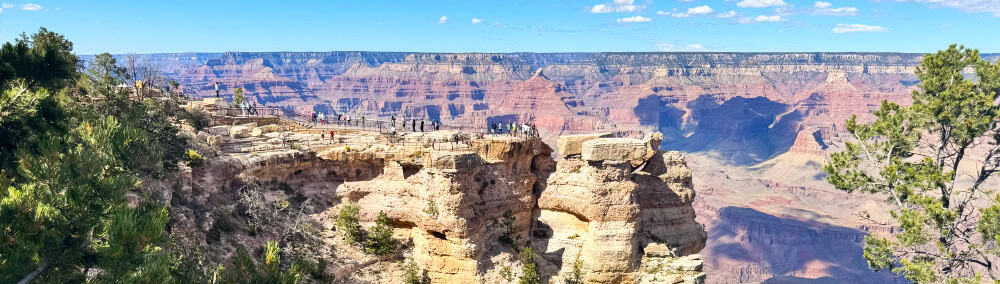
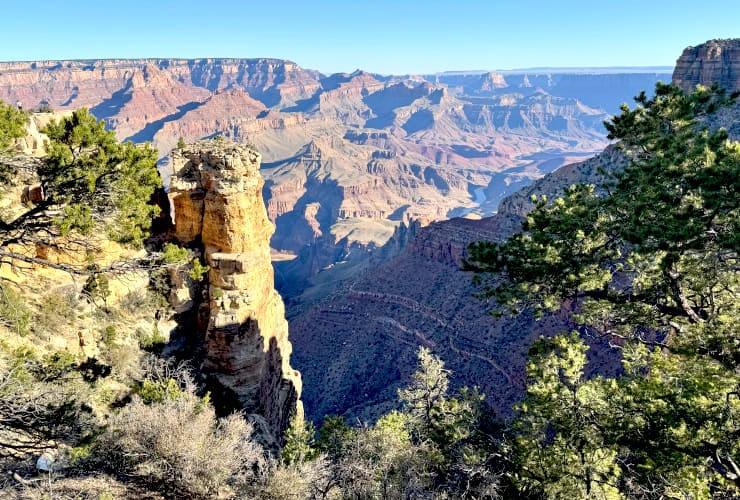
Our first major stop was the iconic Grand Canyon. It’s a jaw-dropping natural wonder, and we suggest giving yourselves at least a few days to explore. Despite the sheer size of the Canyon, there are plenty of options for traveling with a senior with limited mobility.
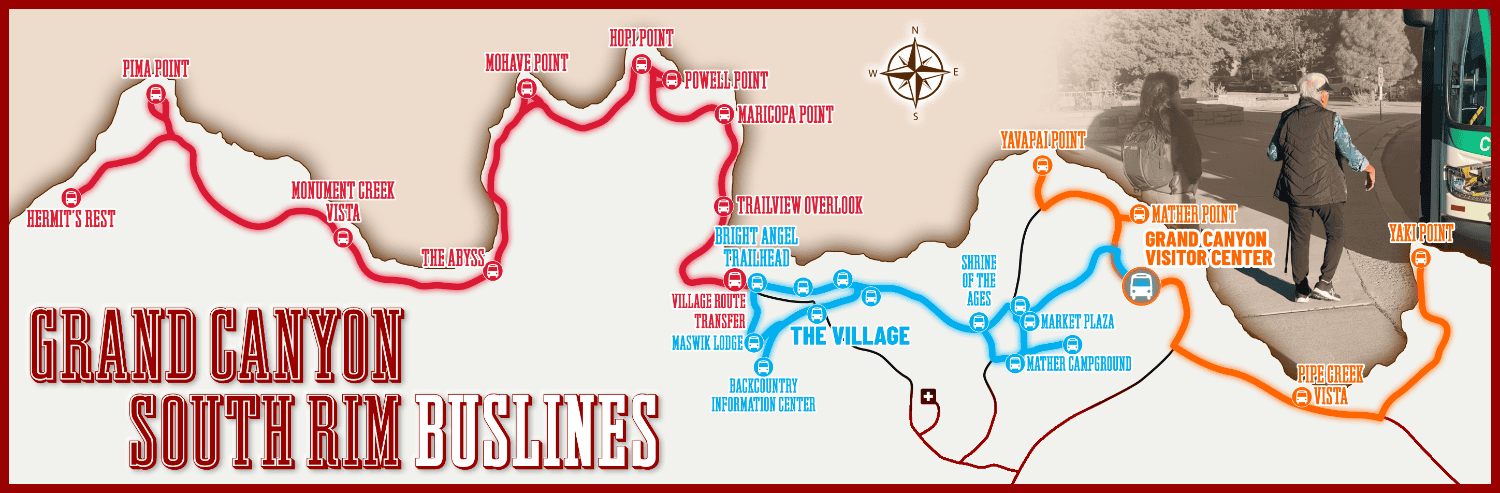
The key is the park’s bus system: no matter where you stay, there is a bus line that will connect you to almost anywhere you wish to go along the accessible South Rim.
- The Red Route runs along the western South Rim, stretching to Hermit’s Rest and providing access to the best scenic overlooks.
- The central Blue Line connects you to lodging, dining, and the Grand Canyon Village.
- The Orange Line hits Mather Point, the absolutely stunning Yavapai Point, and Yaki Point.
The best part? You can hop on and off the bus at any of the South Rim’s 13 stops and usually be just a few steps from spectacular views.
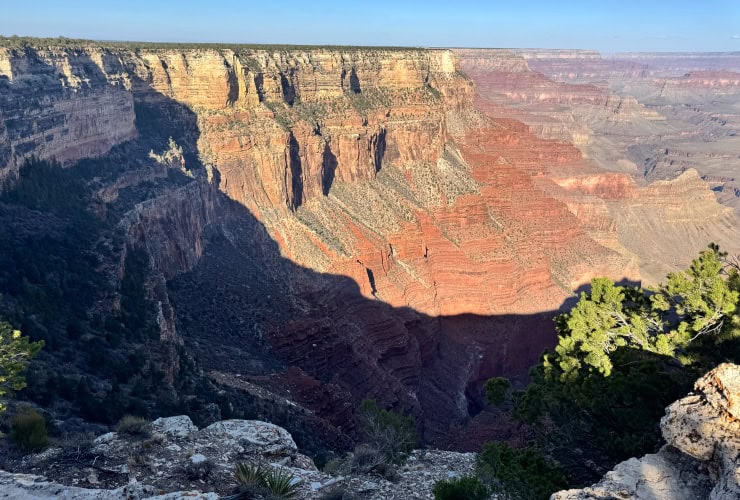
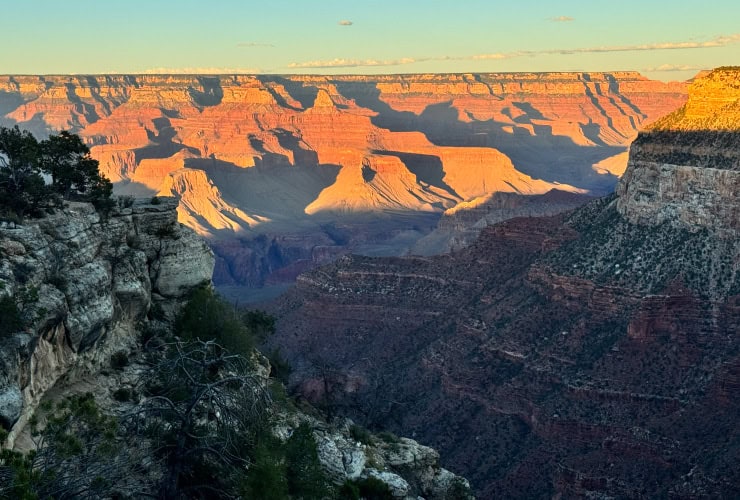
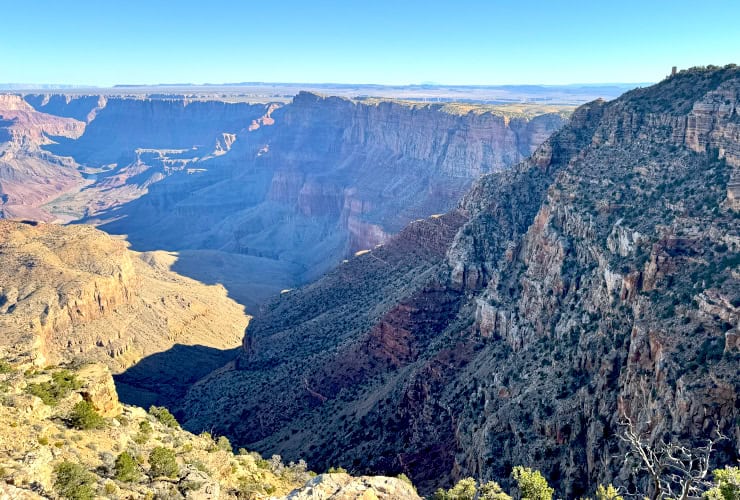
The Canyon changes personalities throughout the day, from the easterly shadows of morning to the colors of late afternoon. Outlooks like Hopi Point and Pima Point offer the best vista views, while inner stops like The Abyss provide more expansive views of the massive rock formations. Honestly, there’s no wrong way to experience the magnificent Grand Canyon.
Leaving the Grand Canyon & Heading East
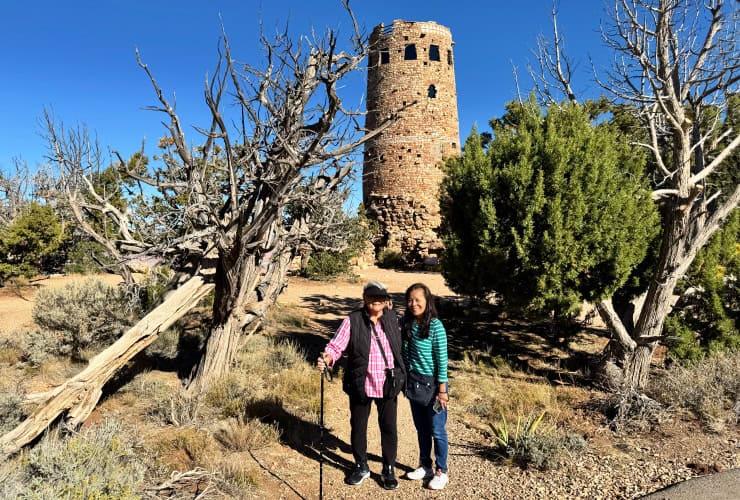
After two and a half days on the South Rim, we headed east. We started by stopping at the farthest east overlooks of the Grand Canyon. This included stops at the expansive Moran Point and the iconic Navajo Point, which offers views of the Colorado River. These overlooks are both just a few feet from the parking lots. Our last stop was the almost century-old Desert View Watchtower, a 70-foot stone structure completed in 1932. It’s just a short, quarter-mile walk to the tower and the final magnificent views of the Canyon.
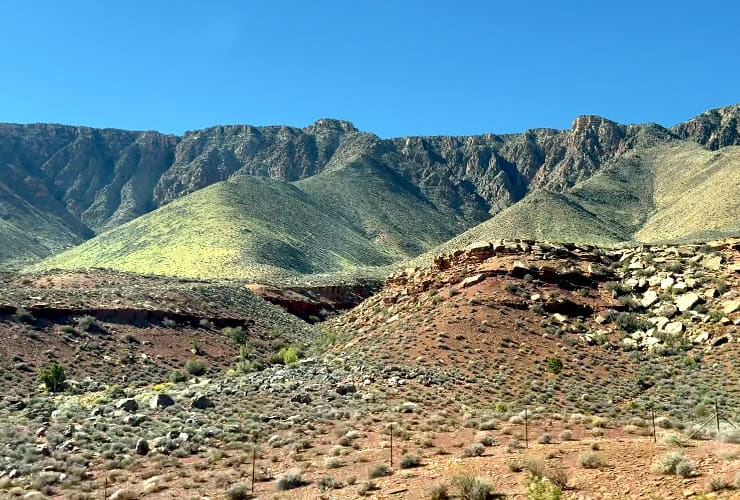
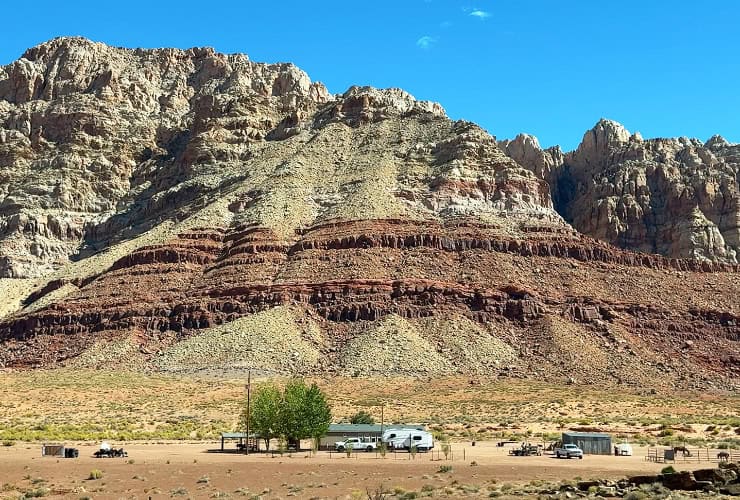
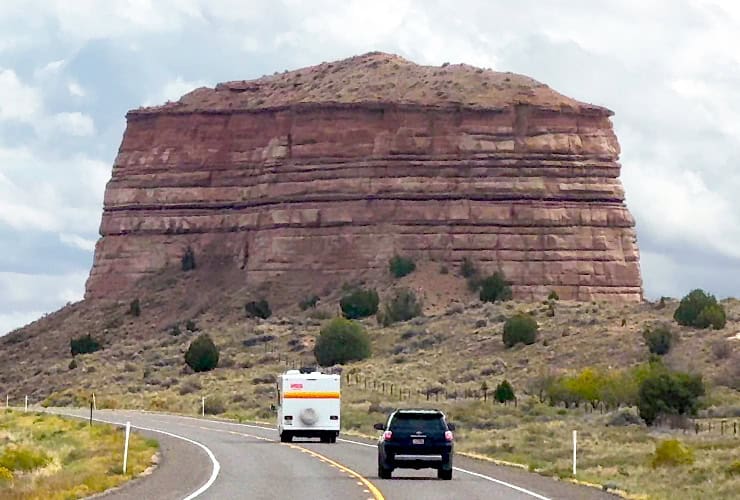
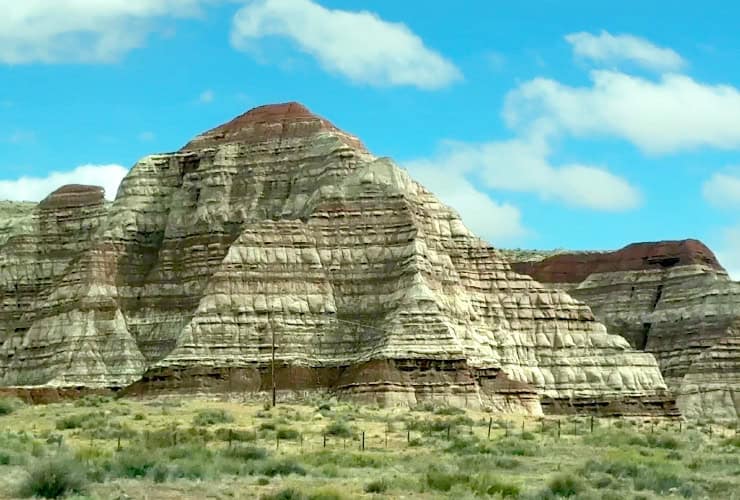
Our two-hour drive north brought us past yellow hills, red clay, rolling mounds of the Painted Desert Badlands, the Antelope Pass and the towering Vermillion Cliffs of Marble Canyon. The scenery is non-stop, which is perfect for an older traveler who enjoys the views from the comfort of the car.
Horseshoe Bend
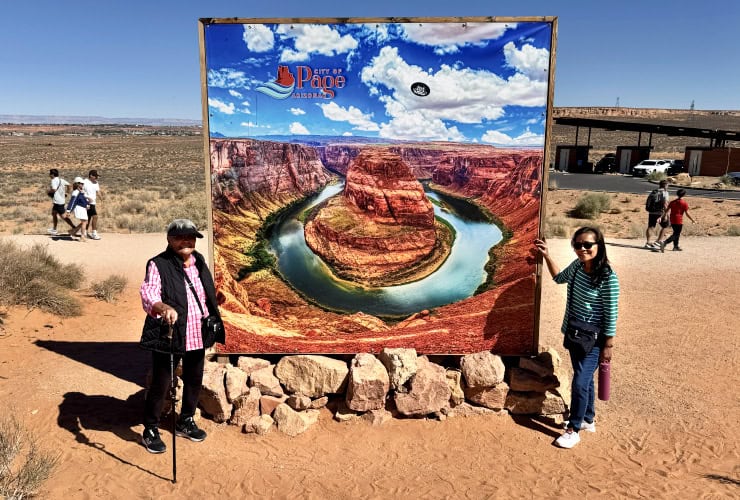
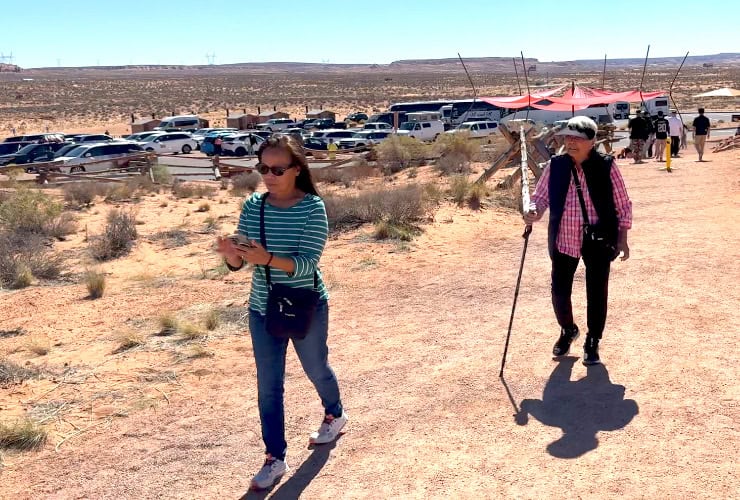
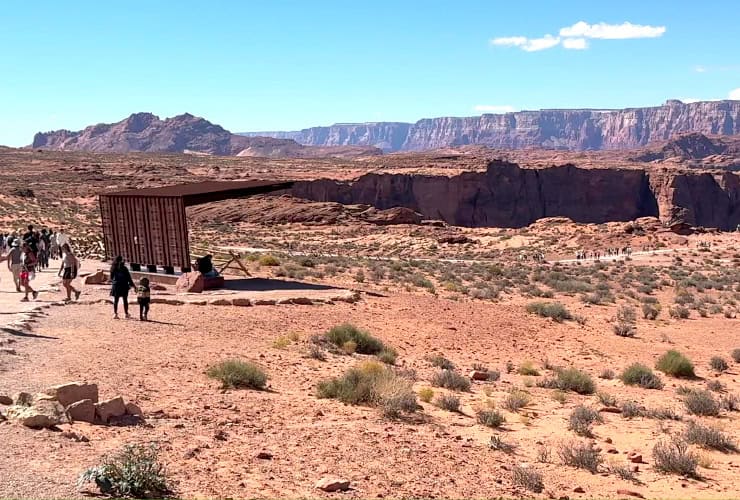
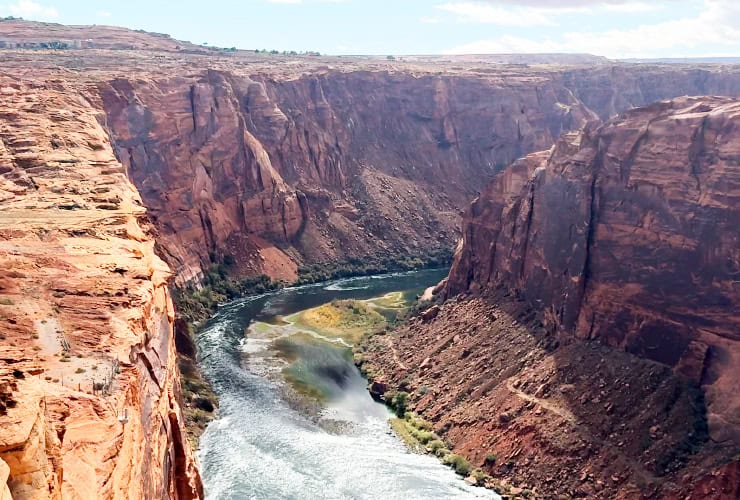
About two and a half hours north of the Grand Canyon is the world-famous Horseshoe Bend. There’s an entry fee that leads to the main parking lot that includes separate spaces for RVs and facilities. The walk from the lot is along a winding, packed sand path which runs gradually downhill, making for a pretty easy walk if you take your time. Crucially, there are two covered rest stops along the route if you need to pause for any reason.
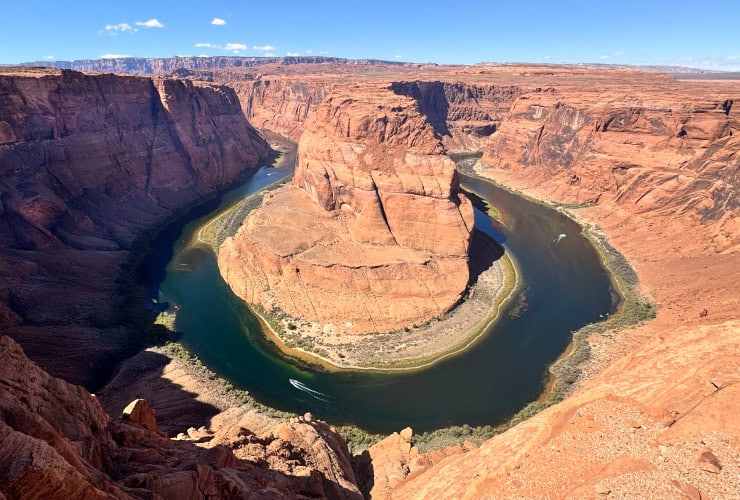
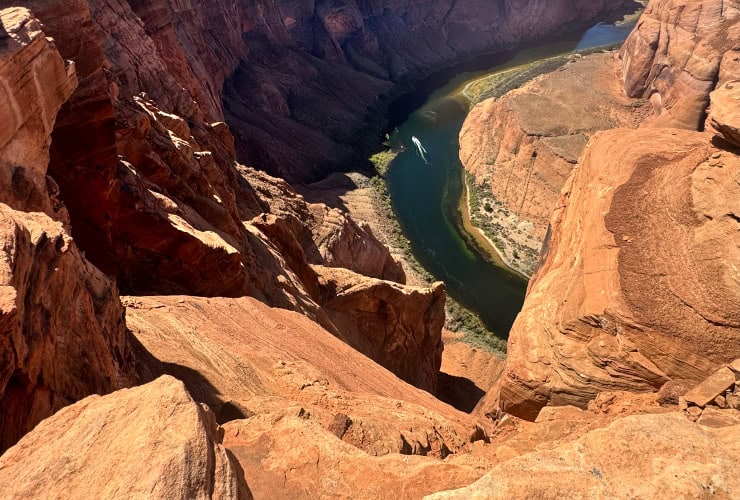
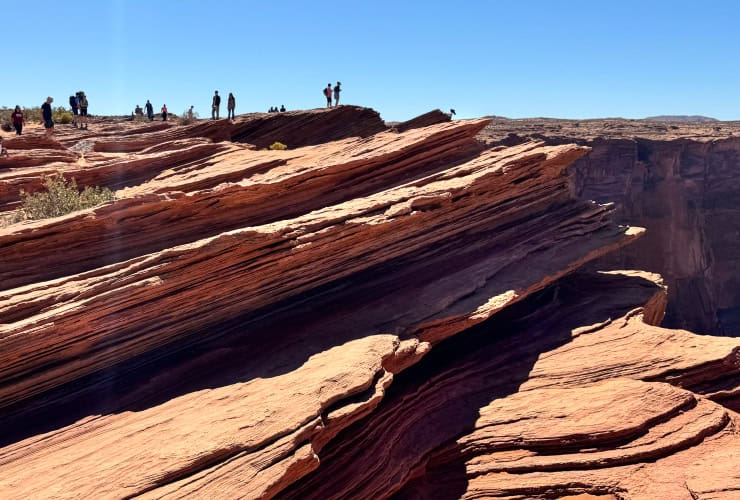
The overlook sits about 1,000 feet above the Colorado River on a horseshoe-shaped meander of Navajo Sandstone. While the rim can get crowded, we found enough open spots to enjoy the breathtaking, nearly vertical view down into Glen Canyon. The unique rocks that cover the northeast side of the rim, formed by wind-blown sand dunes hardened over time, are a fascinating archaeological phenomenon call “cross-bedding”.
Driving AZ-98 East & US-160 East
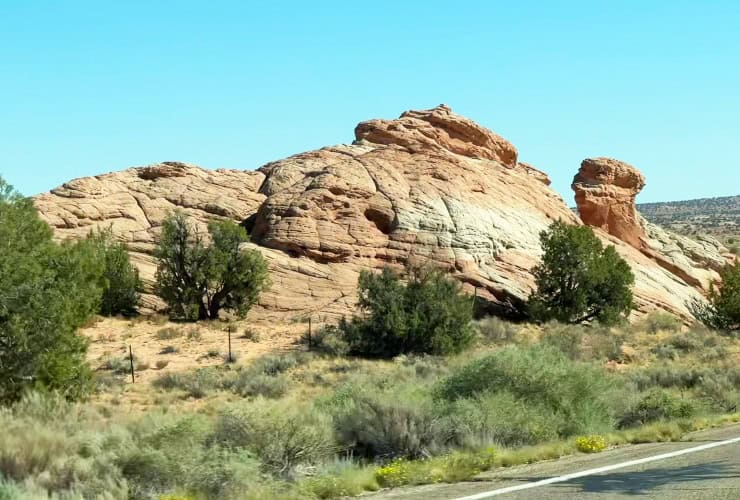
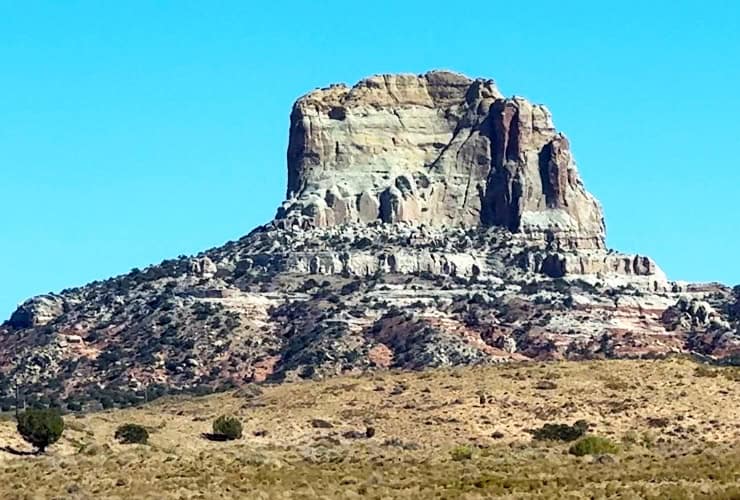
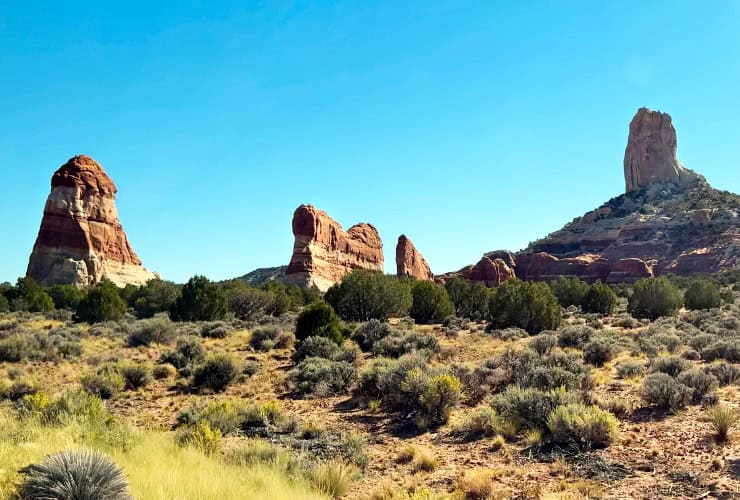
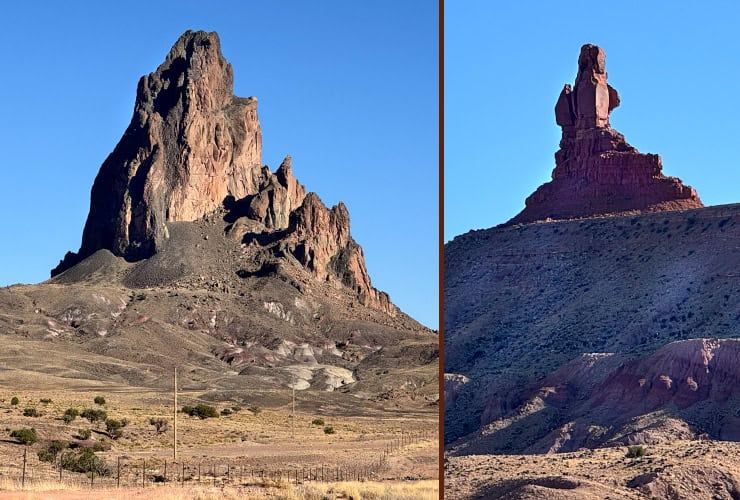
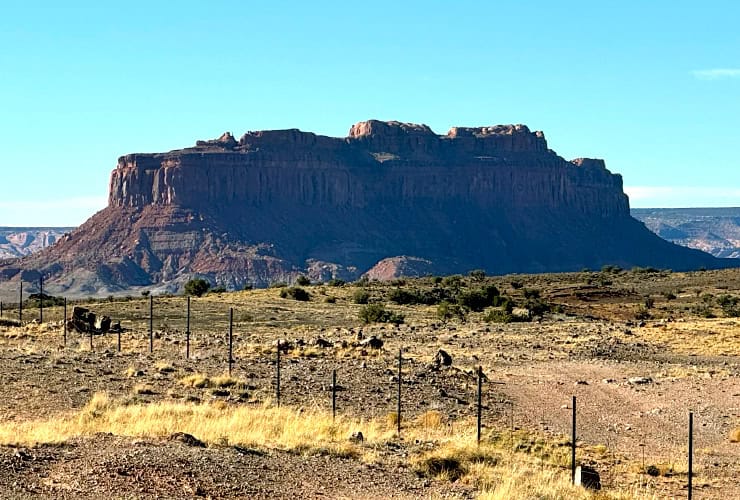
Back in the car, our journey through Navajo Nation land continued, treating us to a variety of fascinating Navajo Sandstone, the impressive, flat-topped Square Butte and, a bit further on, we spotted a line of four slender sandstone features collectively known as Finger Rock.
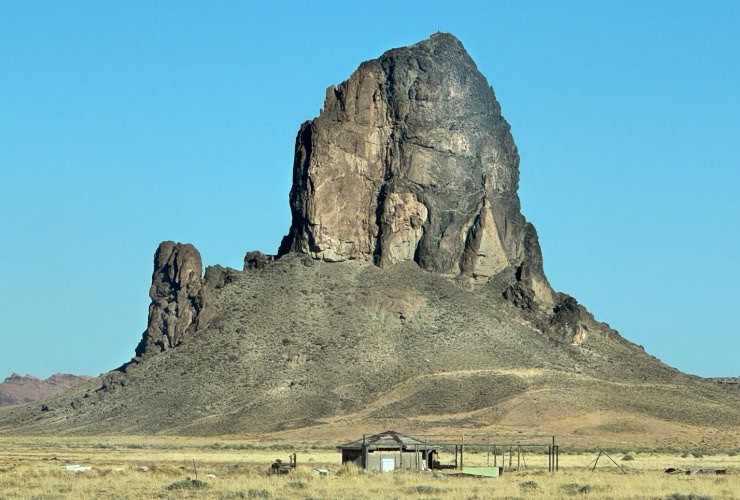
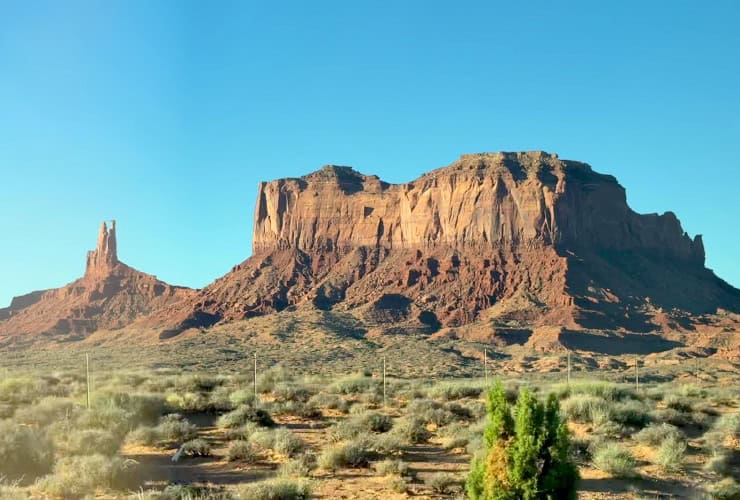
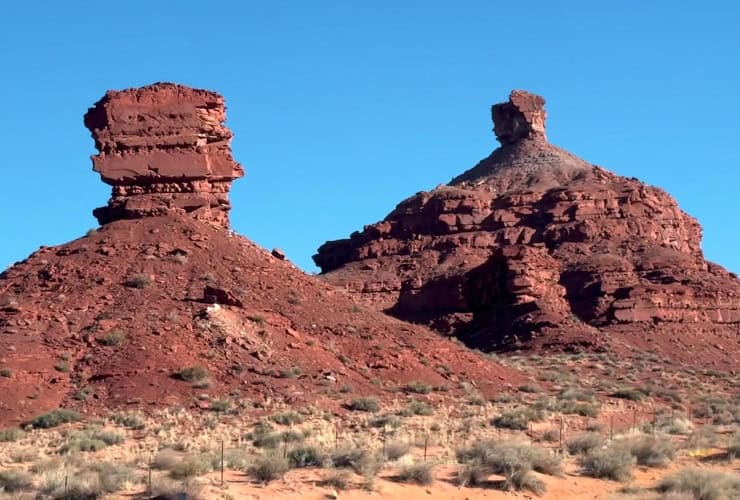
The scenery is constantly shifting until you officially enter Monument Valley, greeted by Small Agahtla Peak, Agahtla Peak, Observer Rock and the iconic Owl Mesa.
Monument Valley
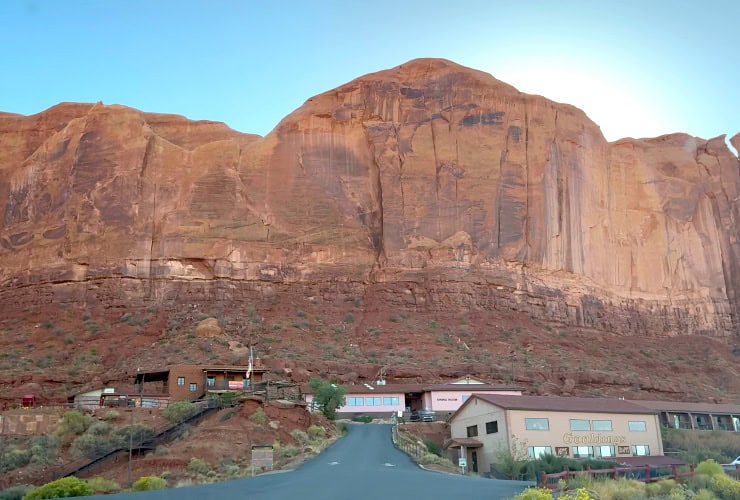
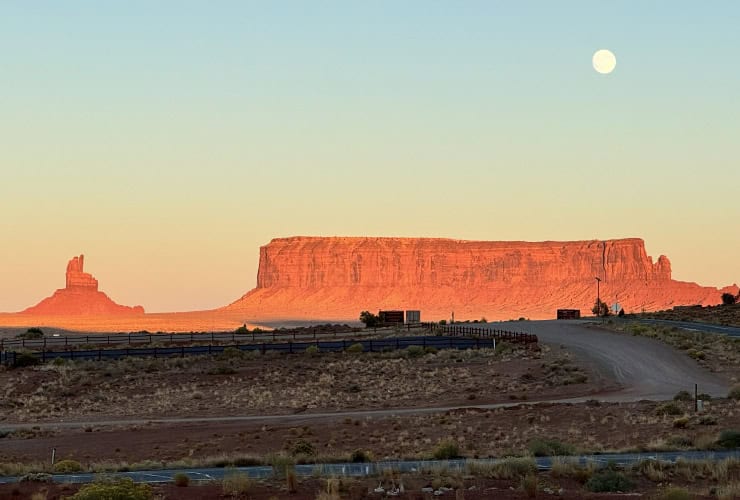
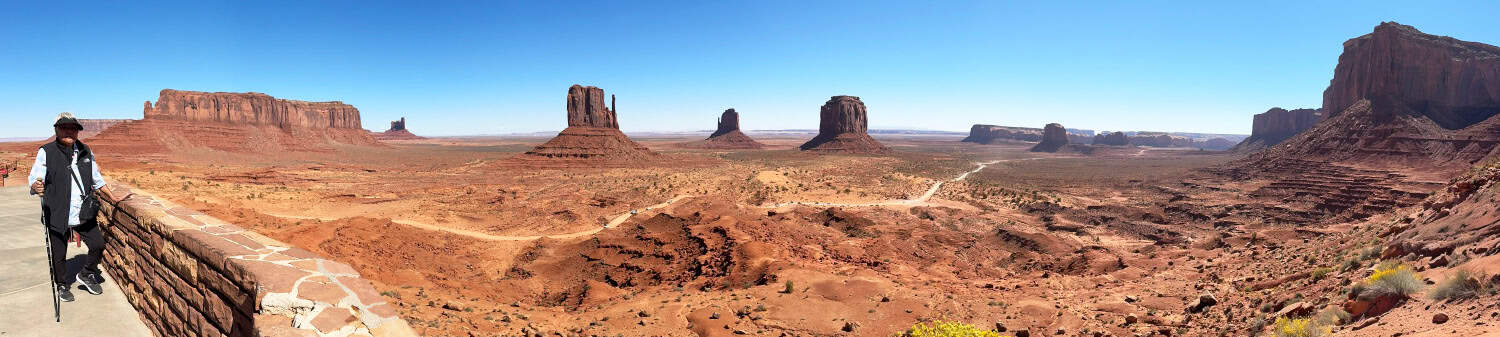
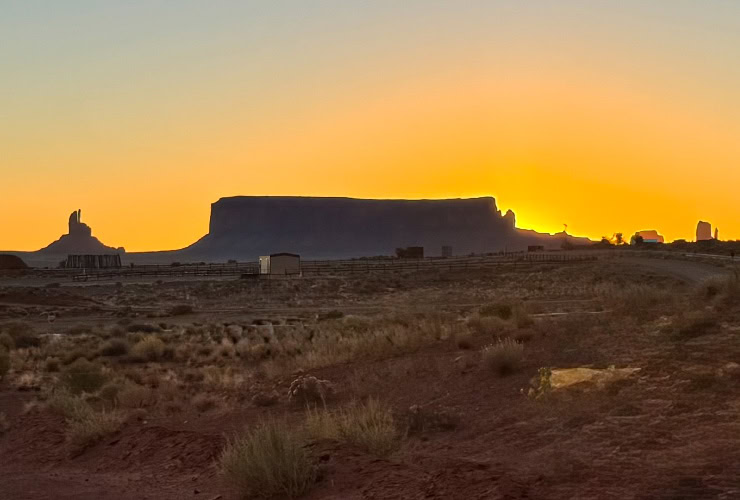
We arrived at our home for the next few days, Goulding’s Lodge with the magnificent Rock Door Mesa dominating the skyline. We did some laundry and quick grocery shopping, both located just a short walk from our cabin. After dinner (also located within the Goulding’s complex), we enjoyed an amazing sunset highlighted by a stunning daytime moon. The next morning, we were up at dawn for a full day with our Navajo guide.
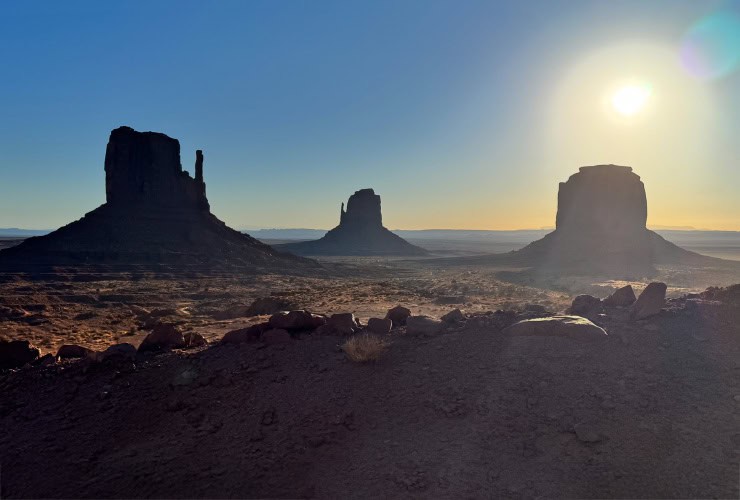
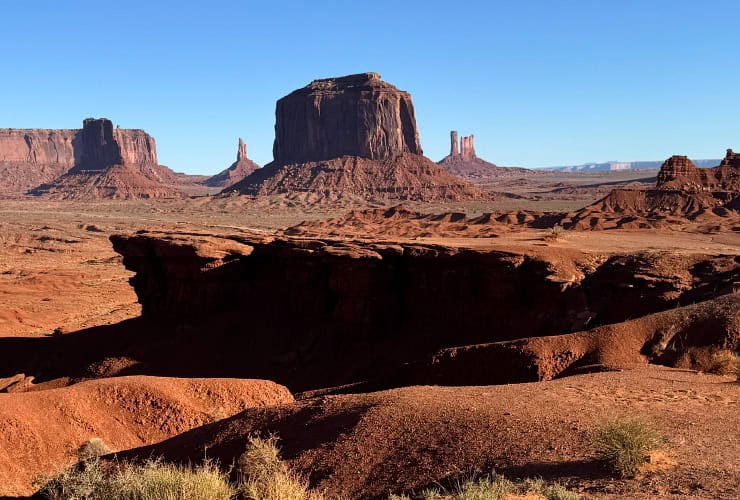
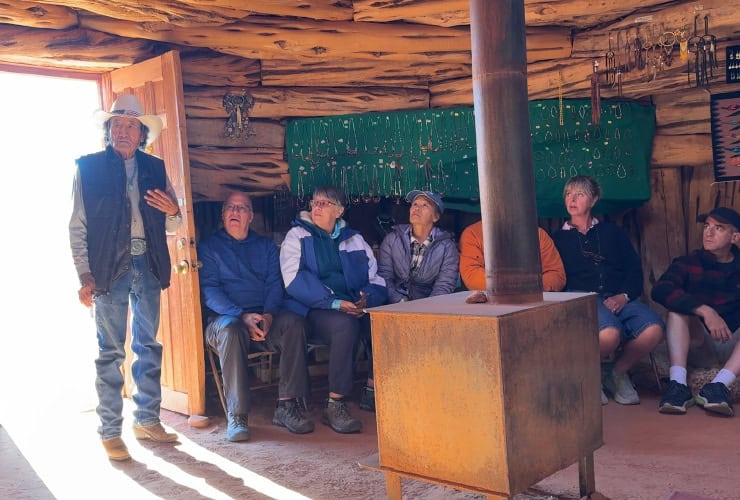
Our first stop was the famous Mittens & Merrick Butte Viewpoint. We also stopped at John Ford’s Point, named after the famous Hollywood director, and even experienced a truly moving Navajo ritual sweathouse with guidance from a local elder.
Our first stop was the famous Mittens & Merrick Butte Viewpoint. We also stopped at John Ford’s Point, named after the famous Hollywood director, and even experienced a truly moving Navajo ritual sweathouse with guidance from a local elder.
For accessible viewing, the Monument Valley Visitor Center terrace provides some of the best views of the valley, and the center itself has a gift shop, restaurant, and small museum.
Goosenecks State Park
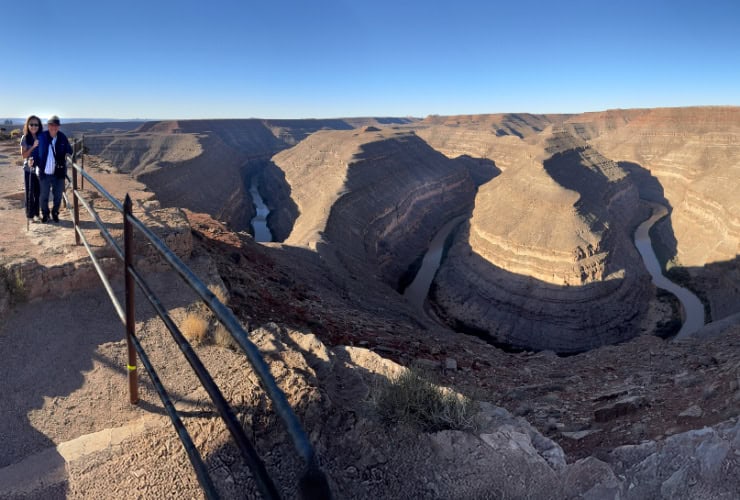
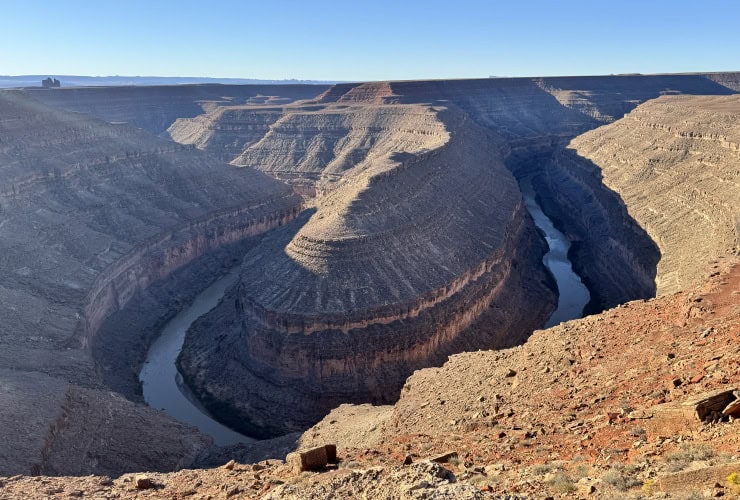
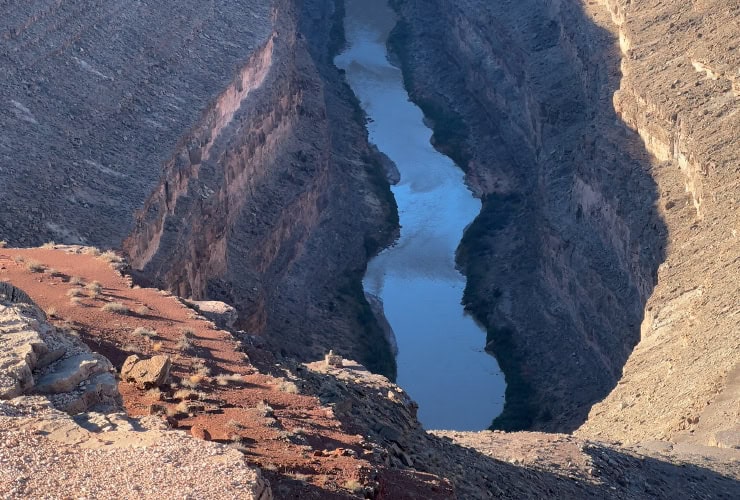
We arrived at Goosenecks State Park just before 9 am. The park is essentially an open parking lot with amazing views just feet away, looking down into the entrenched meanders of the San Juan River. The 1,000-foot-deep view is equally impressive to Horseshoe Bend for its display of geology and the power of wind and water over time.
The Drive to Moab
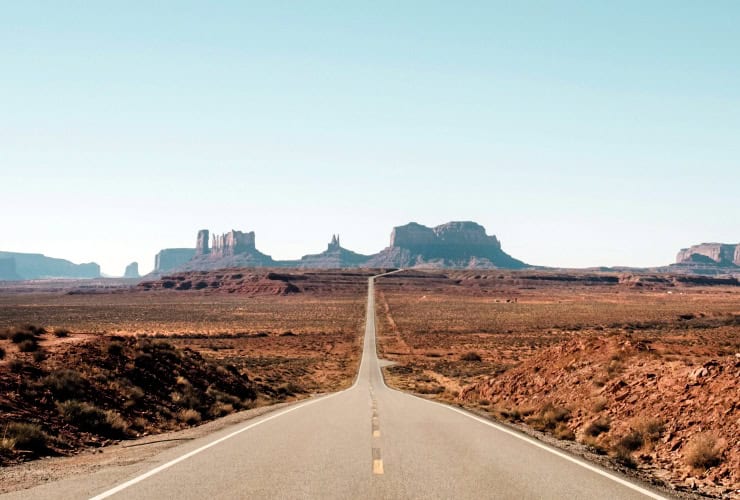
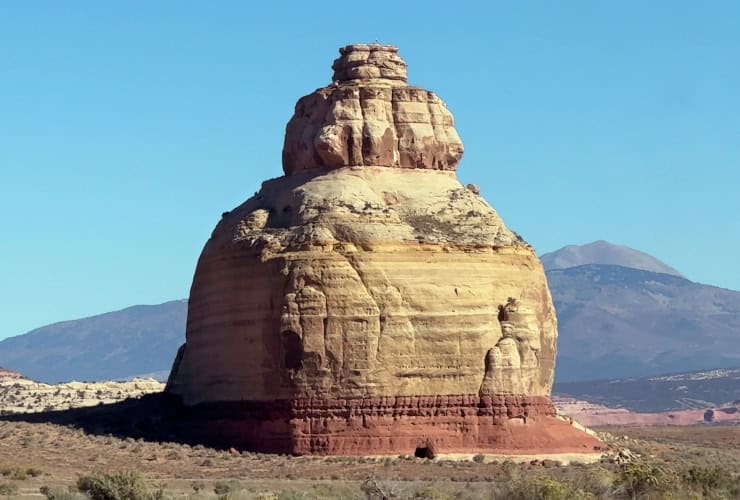
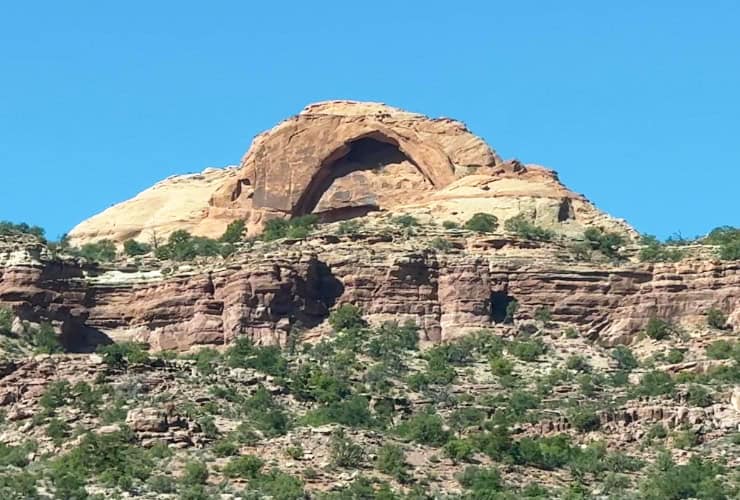
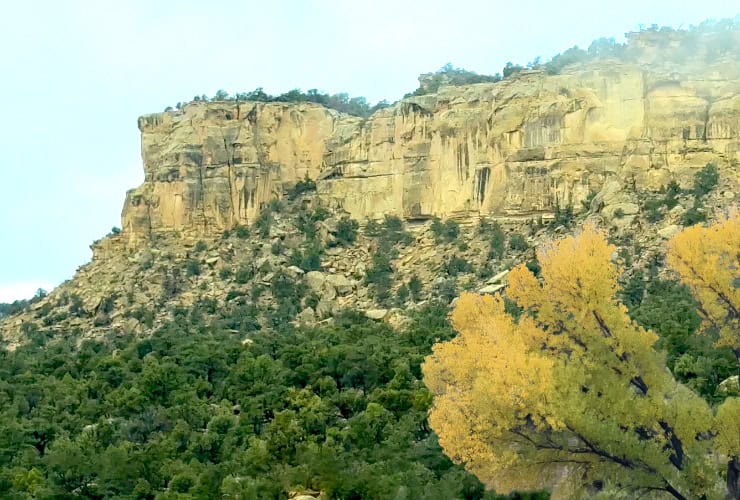
Headed North to Moab, we encountered continuous roadside scenery of colossal red sandstone buttes, mesas and balanced rocks. The drive reveals striking white and brown mesa formations and towering rock monoliths like Church Rock. The panoramic views are spectacular, leading us through a shifting desert panorama until we saw the Moab Rim Arch and the dramatic, serrated ridge of the Moab Rim, welcoming us to historic Moab and our base for the next few days.
Arches National Park
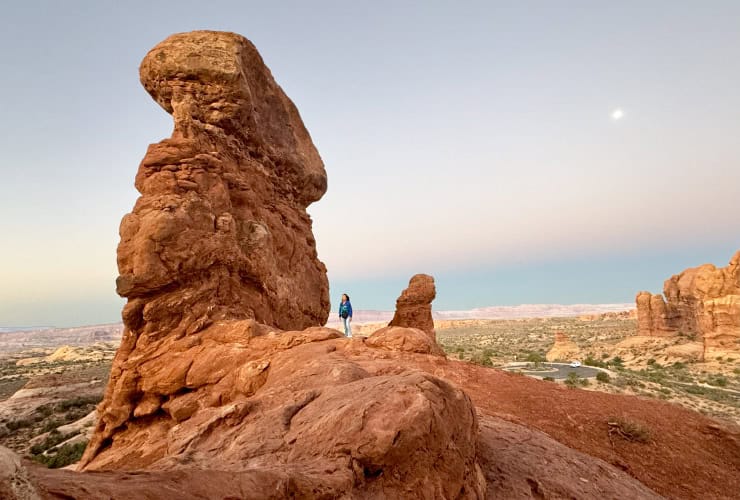
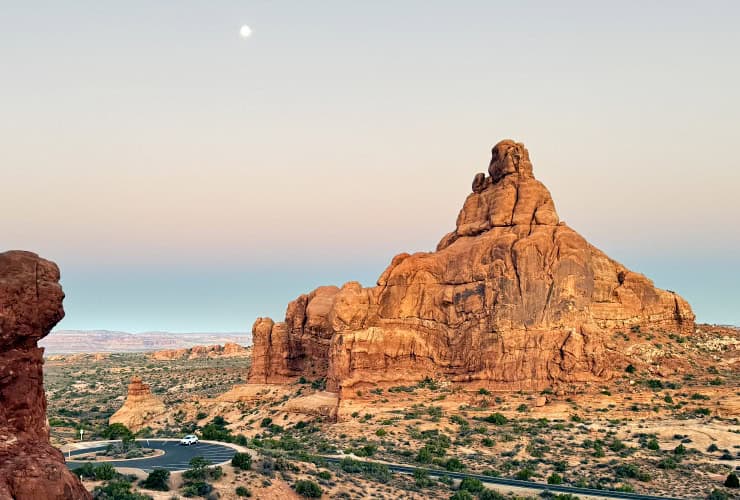
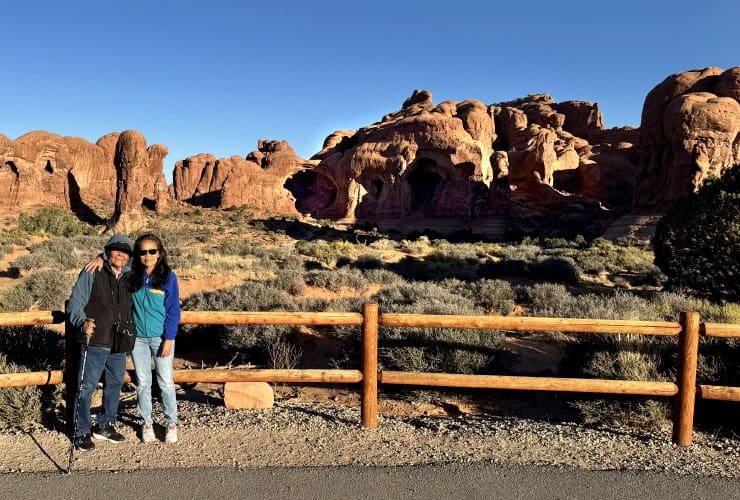
To avoid the entry fee and enjoy a peaceful sunrise, we entered Arches National Park before 7 am. We chose the Garden of Eden to start, with its cluster of sandstone fins and hoodoos. You can enjoy the view from the parking lot (with Ham Rock looming in the distance) or climb up into the formations.
The rock formation in Arches are amazing but the park is so named for a reason . . . the Arches. Many of the arches require long hikes to see but there are plenty of great arches very accessible for those that aren’t quite as mobile. Here is a sample of some of those reachable arches to enjoy.
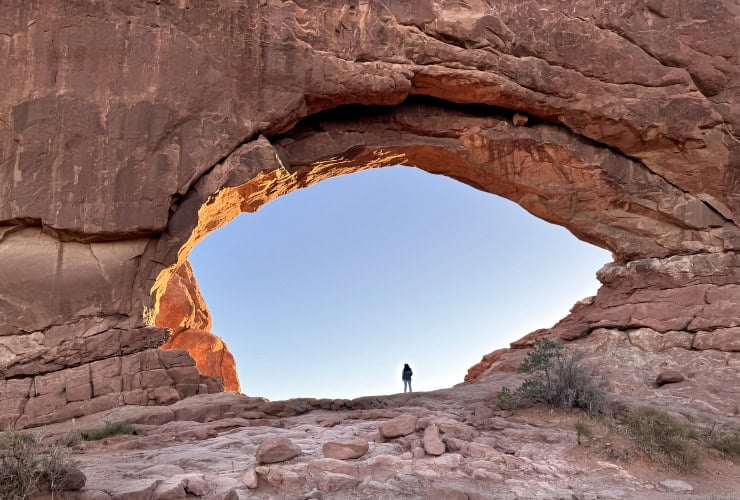
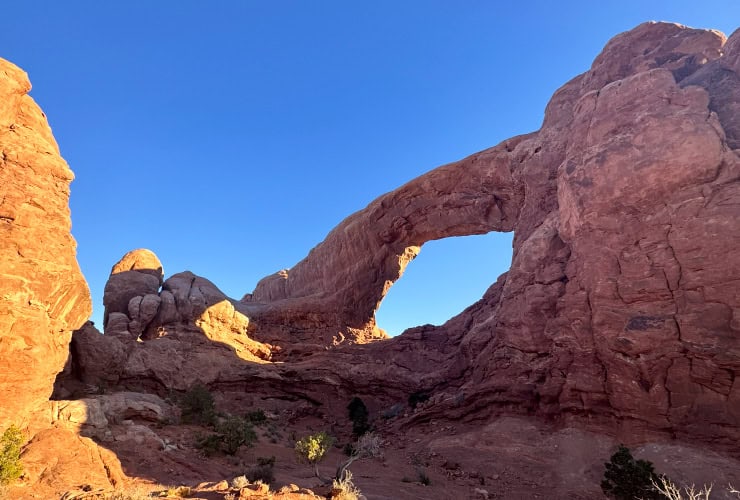
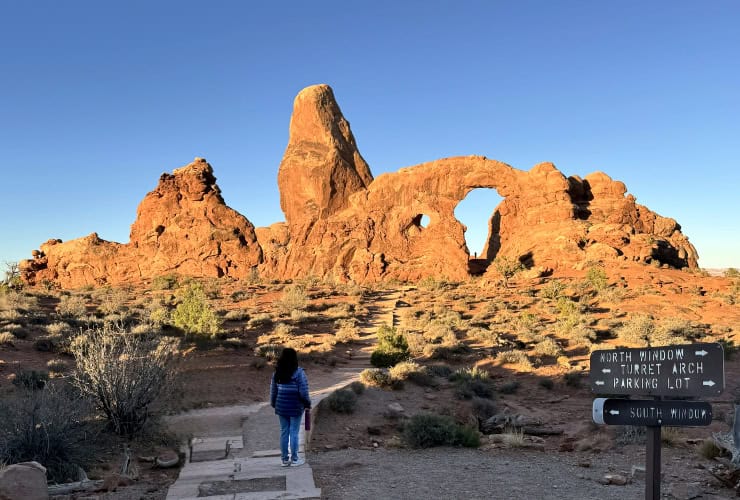
- The Windows Section: Parking fills up quickly, but the main, mostly gentle 1-mile loop trail allows you to walk beneath the massive North and South Window Arches and the Turret Arch.
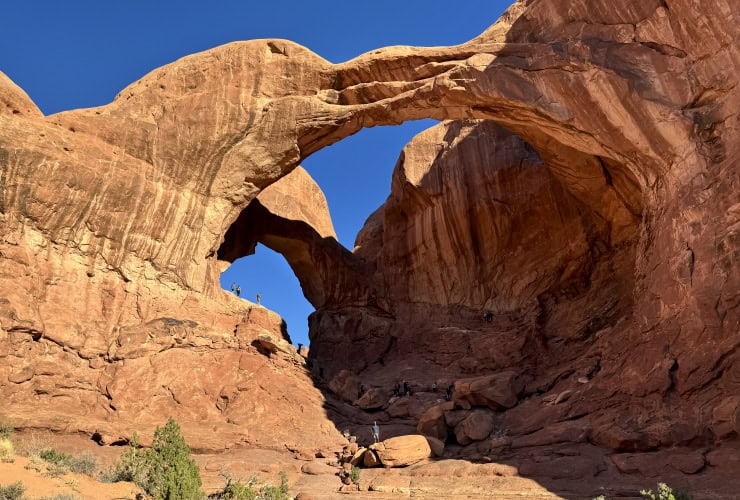
- Double Arch: We took the short, accessible out-and-back trail to the base of the towering, 112-foot “pothole arch.” It’s the tallest arch in the park.
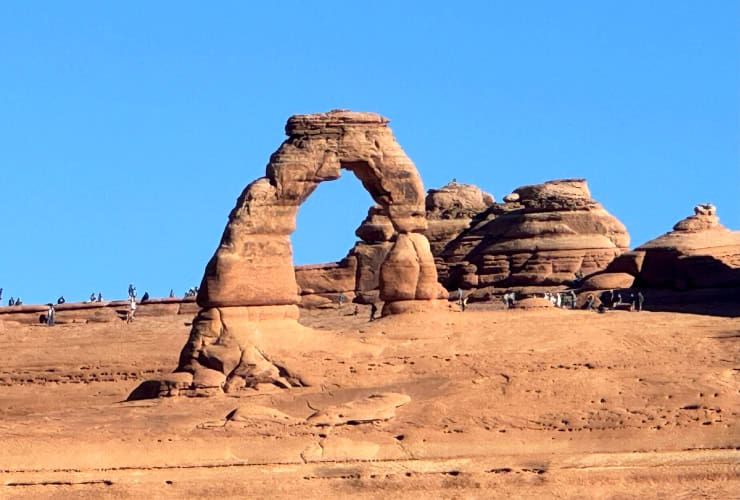
- Delicate Arch: For a great view without the 2-hour rugged hike, there is a Lower Arch Viewpoint near the parking lot or a 1-mile loop trail that leads to the Upper Delicate Arch Viewpoint.
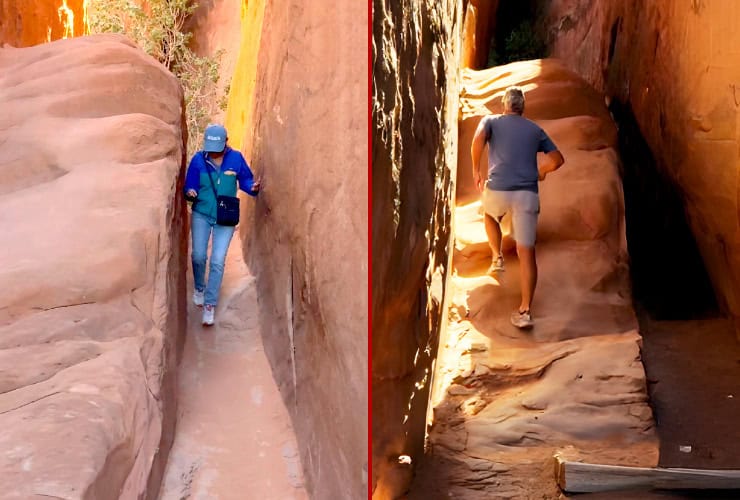
- Sand Dune Arch: This arch is just minutes from the parking lot via a flat path you can slowly walk your way through or run over the top.
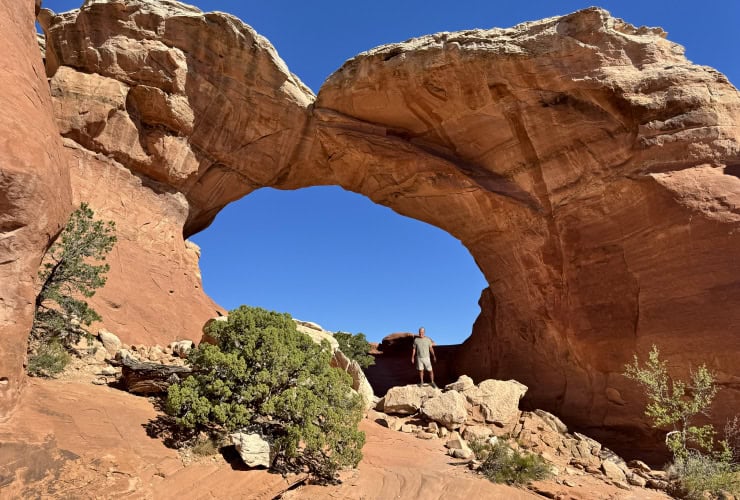
- Broken Arch: Next door a 2-mile loop trail takes you to a stunning sandstone formation that is technically still whole but is named for the large crack running through its apex.
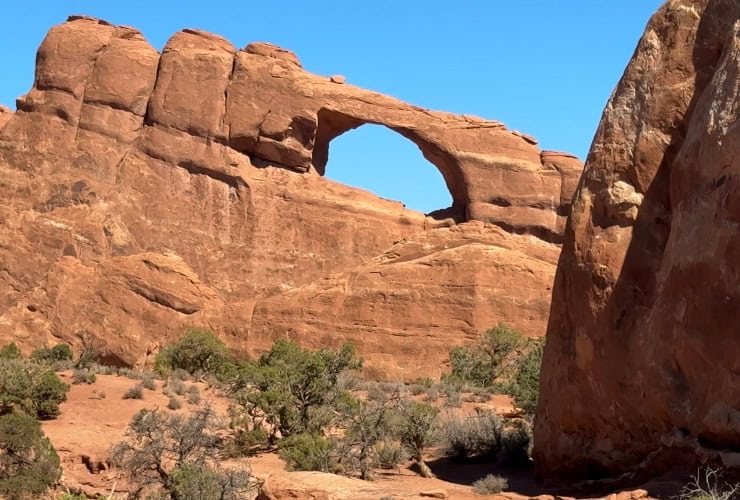
- Skyline Arch: Seen from the road, and with it’s own turnout, Skyline arch sits high atop a sandstone fin that suddenly doubled in size in 1940 when a large boulder fell from its opening.
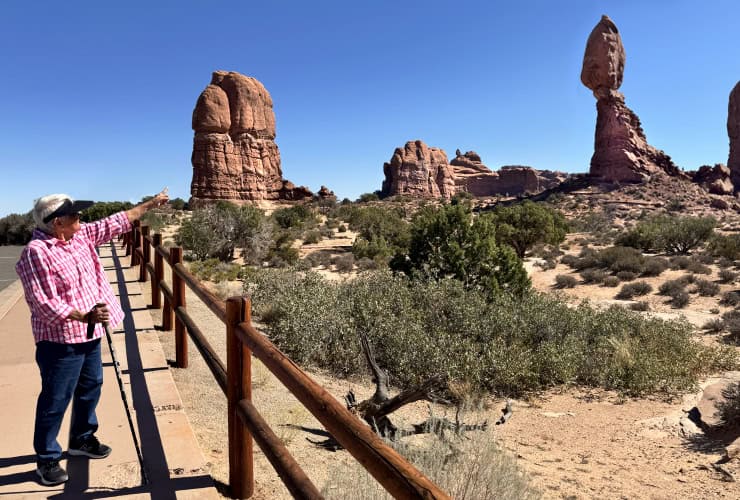
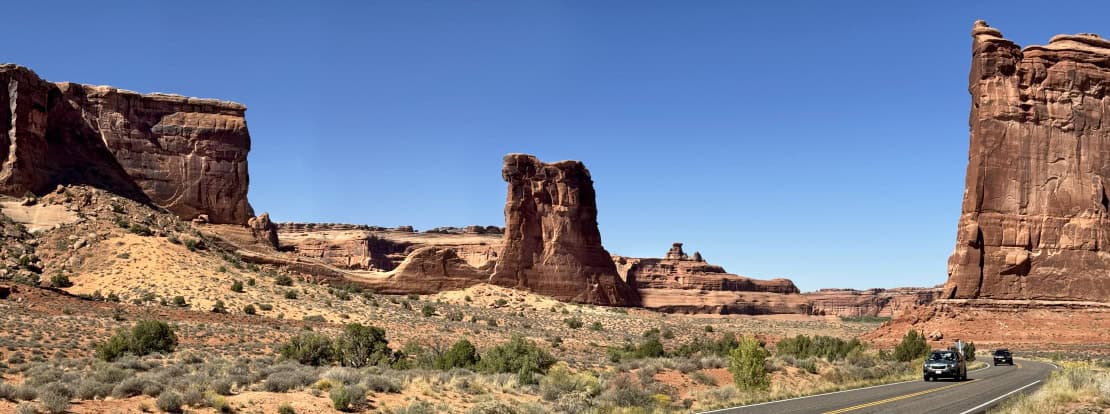
We also stopped to enjoy the Balanced Rock, and the Courthouse Towers both with their own parking lots and paths to explore.
Canyonlands National Park - Island in the Sky District

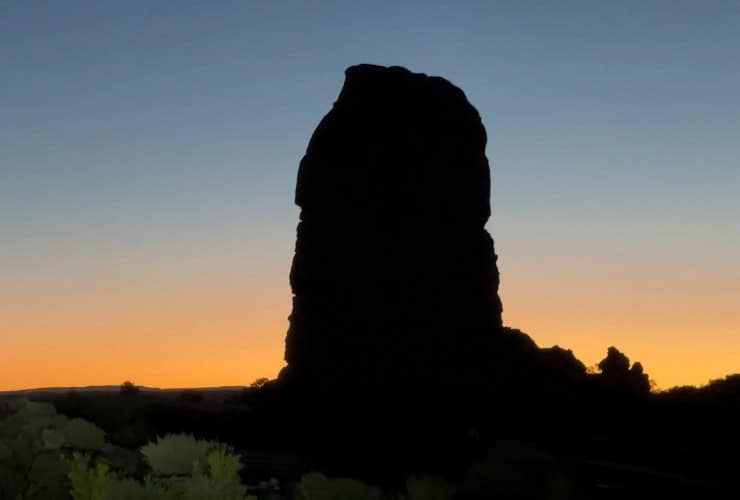
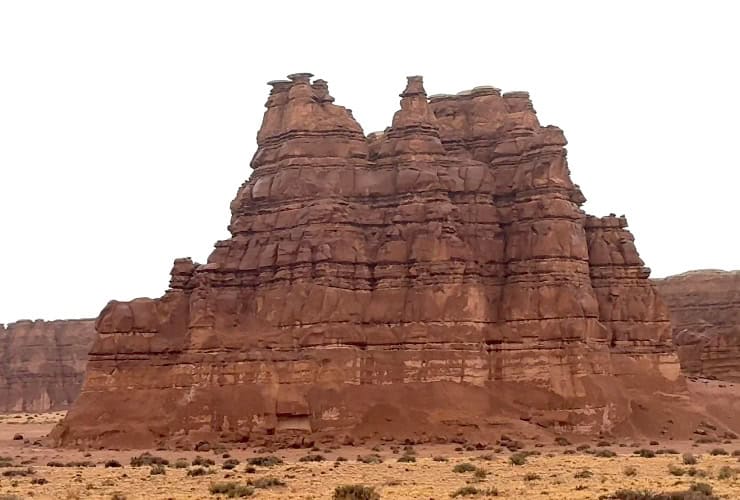
The following day, just a half-hour southwest of Moab our destination was the Island in the Sky District of Canyonlands National Park. This park is ideal for accessible sightseeing, as most views are just steps from the car. A great example is the unmarked Candlestick Tower Overlook featured in numerous TV shows and movies.
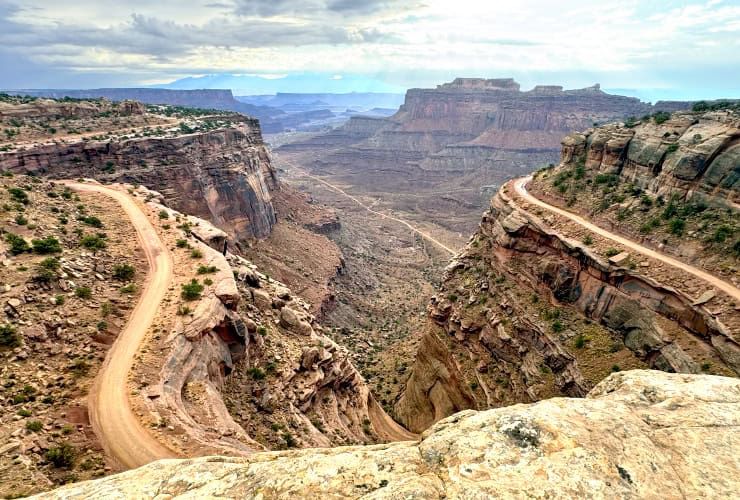
- Shafer Canyon Overlook: We walked across the street from the Visitor Center to one of the two overlooks down into Shafer Canyon. The dramatic viewpoint unfolds over a vast, layered canyon with a thousand-foot sheer drop.
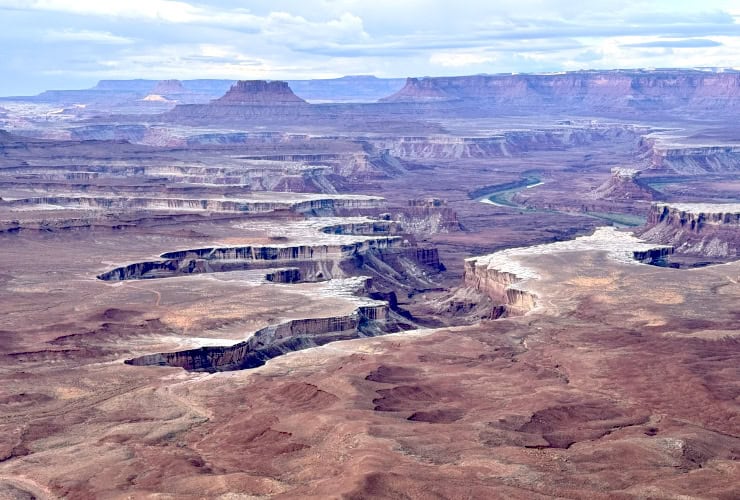
- Green River Overlook: The viewpoint is just a few minutes’ walk down a concrete walking path from the parking lot. It offers a 180-degree panorama of the Green River Canyon.
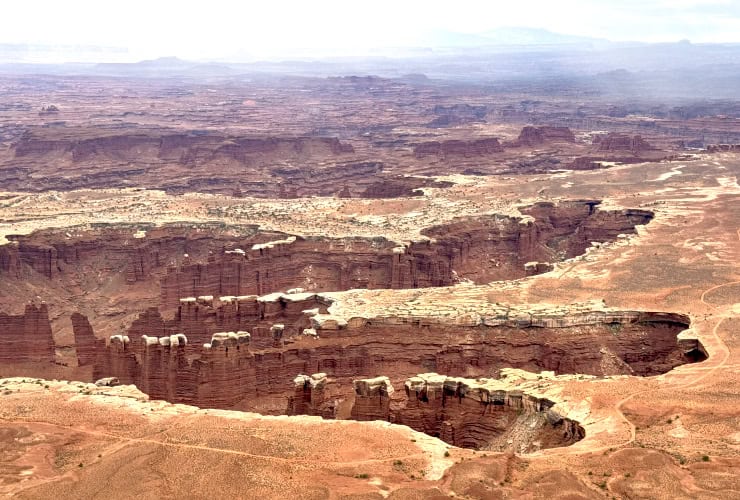
- Grand View Point Overlook: The main platform is only a few minutes’ walk down a well-paved, flat path from the surprisingly small parking area. From here, you can gaze down into a unique landscape carved by the Colorado and Green Rivers, seeing the “Maze” and the distant Needles District.
Each of these magnificent overlooks have their own parking lots and flat, short, walking trails to the edge . . . if you dare.
Fruita Historic District (Capitol Reef National Park)
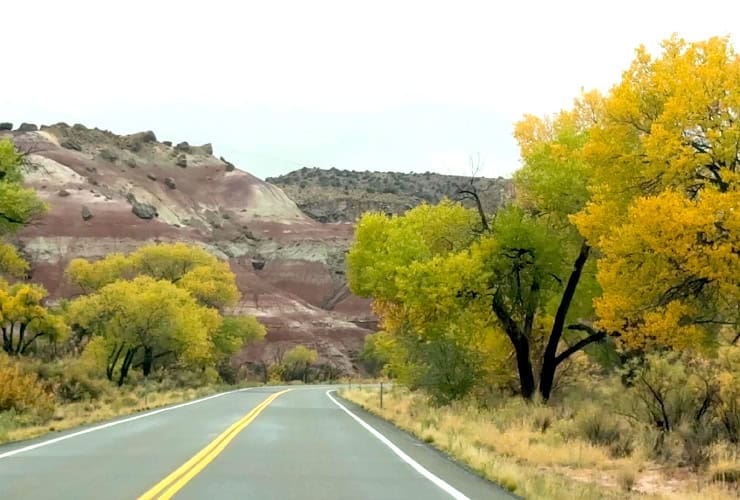
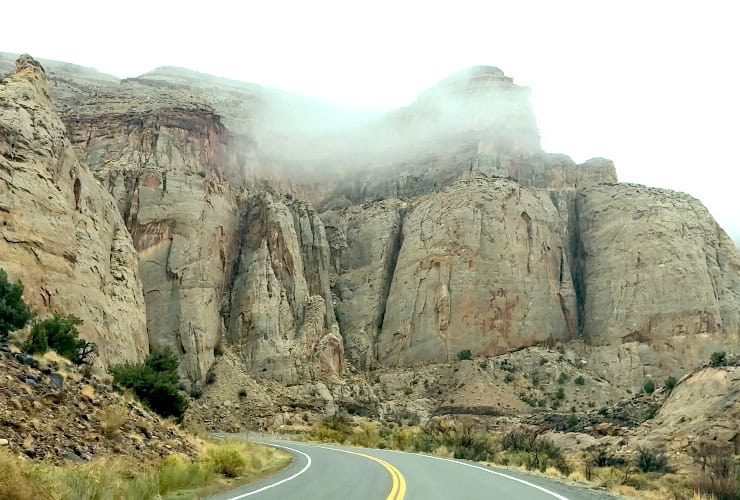
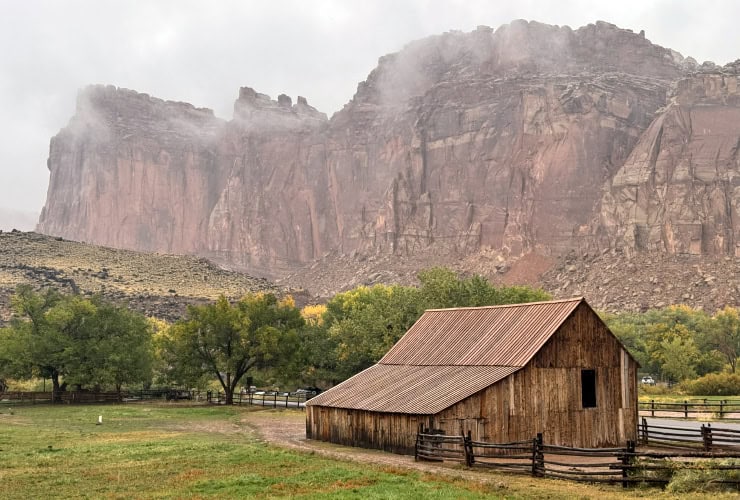
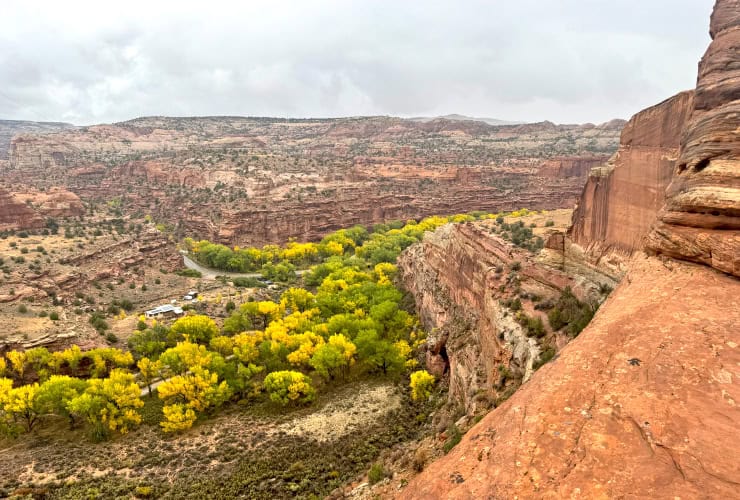
The next morning we departed Moab, heading west along UT-24. Despite some rain and fog, we saw beautiful mid-October foliage and numerous interesting rock formations.
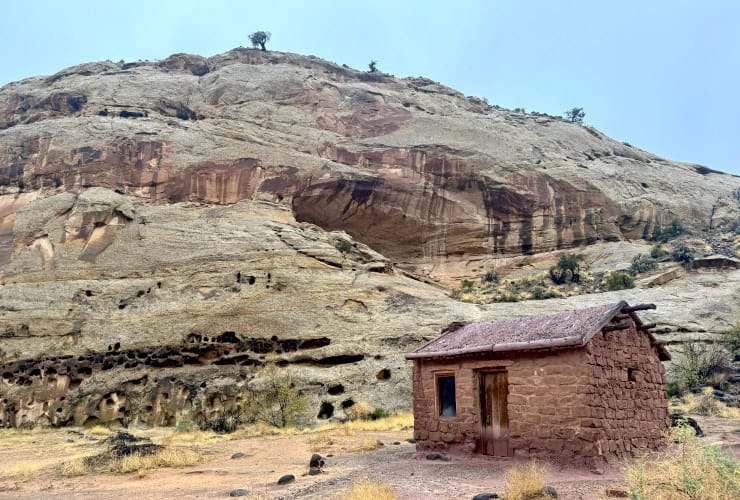
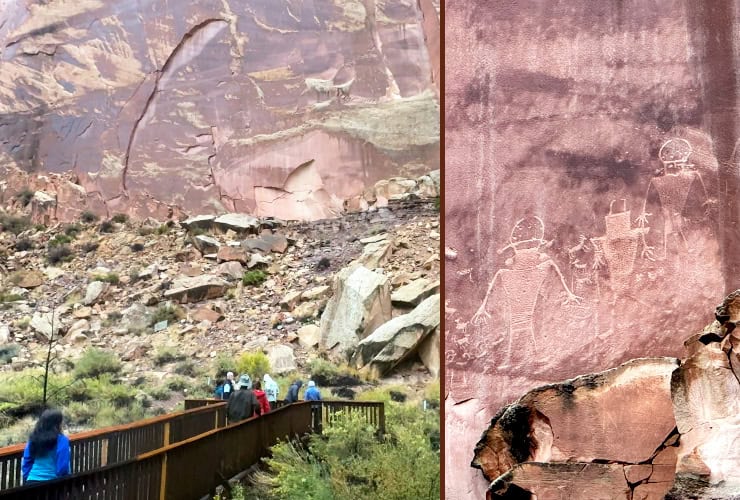
The Fruita Historic District is a great accessible stop because the highlights are each a short drive apart:
- The Behunin Cabin, illustrating the life of early pioneers.
- Striking Petroglyph Panels left by the Fremont people, just a few minutes from the cabin.
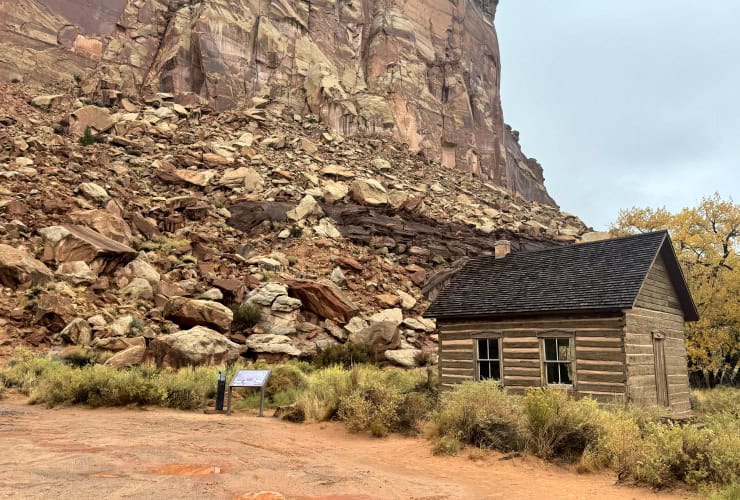
- The Fruita Schoolhouse and the impressive Pendleton Barn, reflecting the community’s agricultural stability.
If you enjoy early Western settler history you’ll really appreciate this area.
Driving Scenic Byway 12
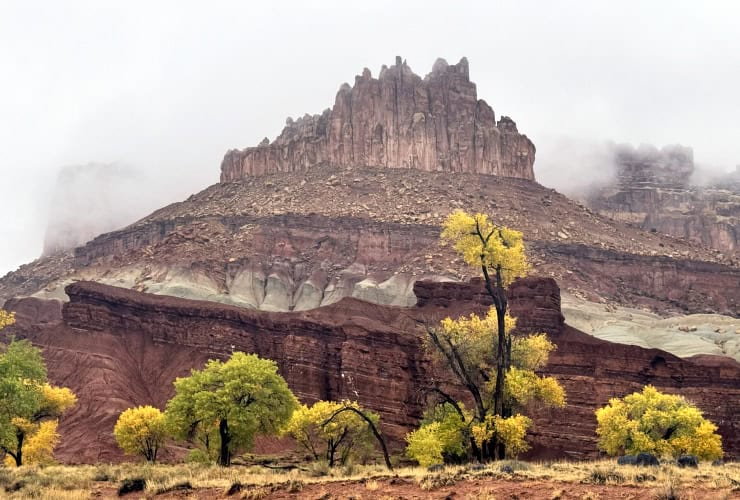
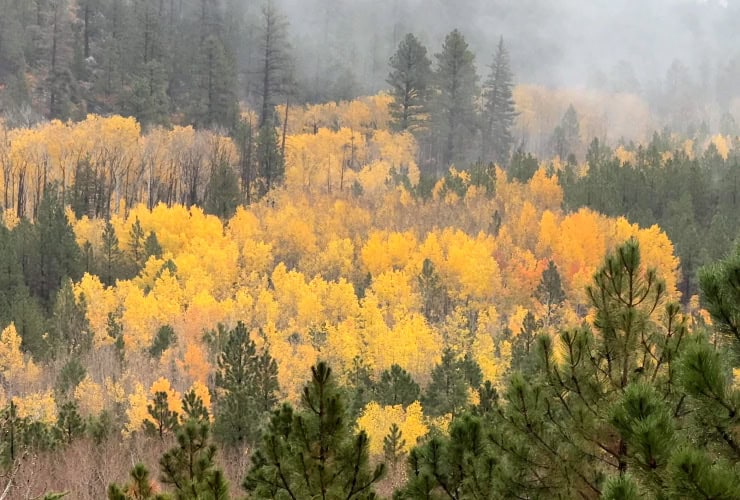
From the Capitol Reef National Park Visitor Center we took a few moments to admire The Castle and the Rim Overlook just across the street. Back on the road, we turned South onto the iconic Scenic Byway 12. Even with overcast skies, the drive was incredible, featuring views from the Singleton Overlook and the brilliant yellow of the Quaking Aspens.
This 123-mile drive is a continuous destination in itself. We traveled along an area called The Hogback, known for its sheer drop-offs and panoramic views of the canyons and the vast Grand Staircase-Escalante region.
- The Boynton Overlook provides dramatic views of the foliage-filled Escalante River Canyon.
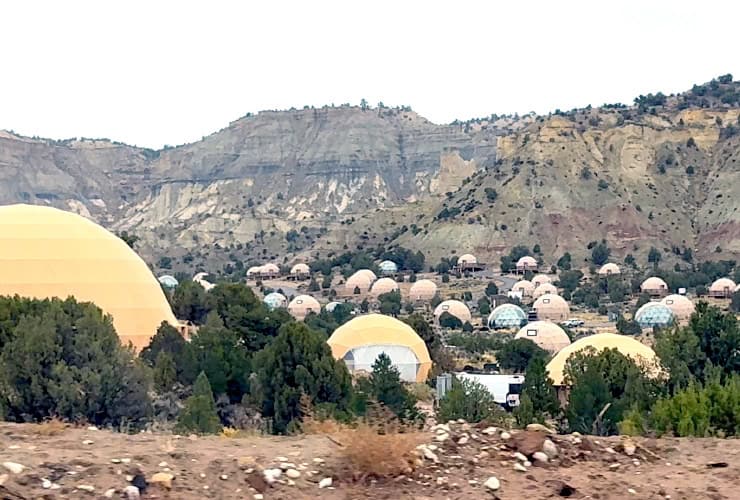
- We passed the futuristic looking Clear Sky Resorts which offers luxury glamping in climate-controlled geodesic domes featuring panoramic views and skylights perfect for stargazing.
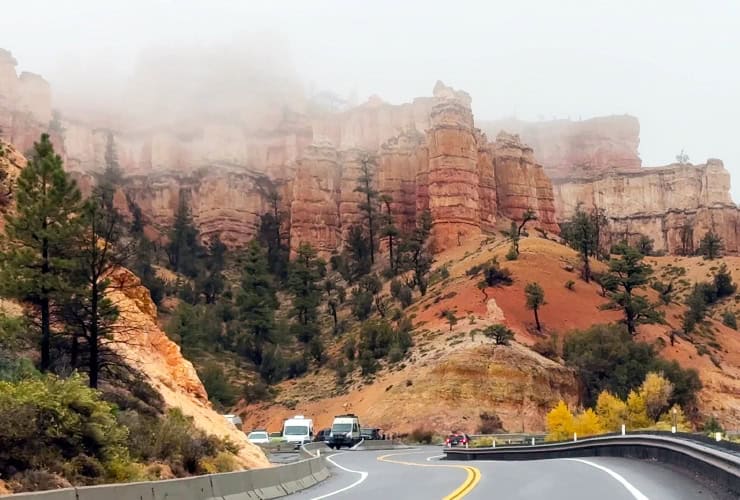
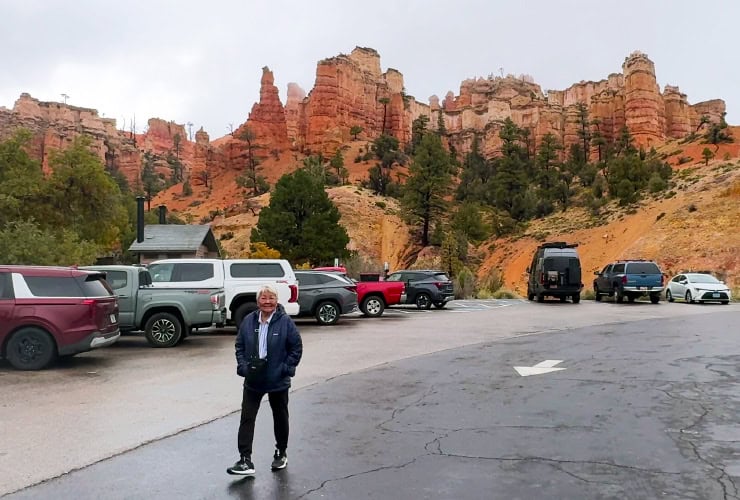
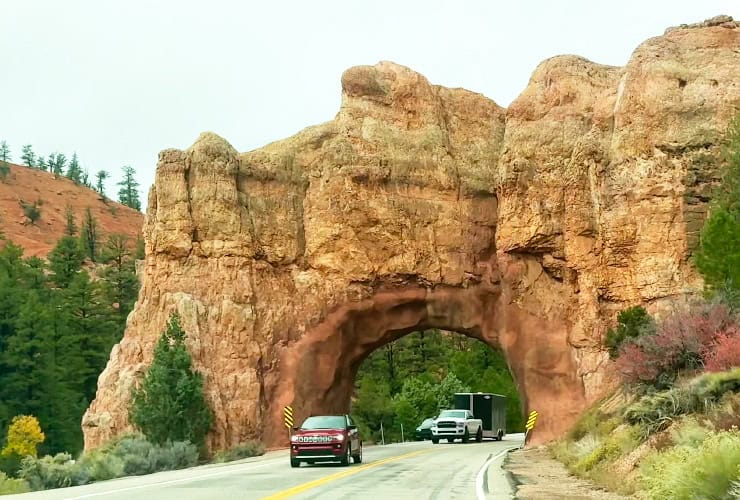
A highlight was a pass through Bryce Canyon including the brilliant Mossy Cave Trailhead and the Red Canyon Arch, a cinematic experience where you drive through a pair of iconic, crimson-hued tunnels, creating a perfect entryway for the rest of the park.
Driving US-89 South
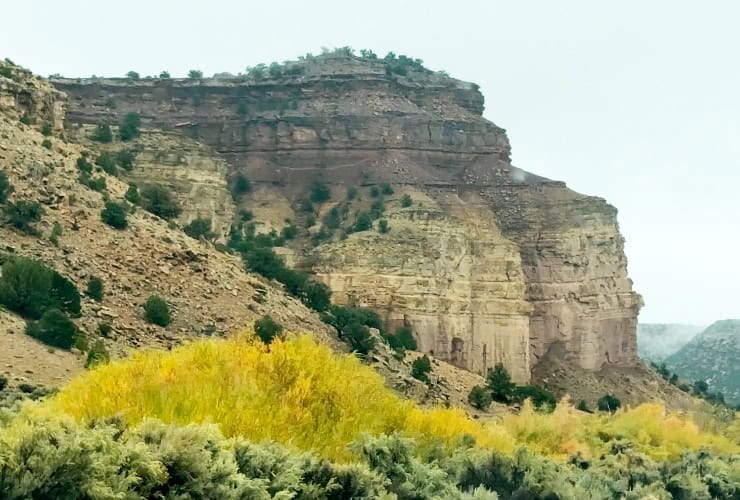
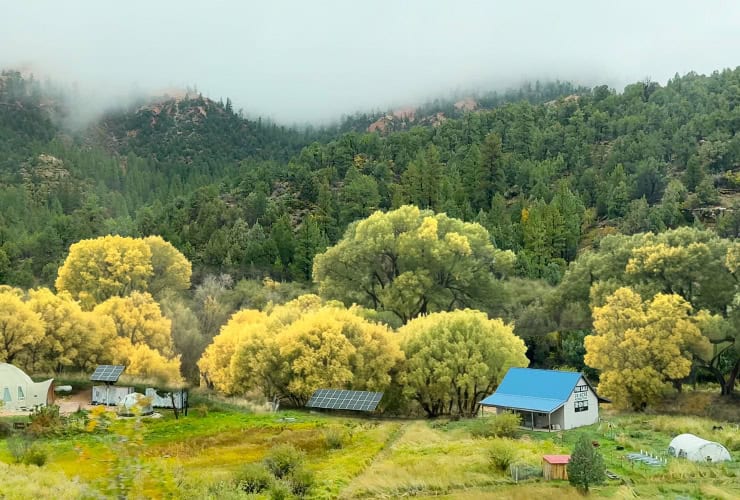
Our final leg led us south along the US-89. The mountain roads contrasted evergreen forests with autumn cottonwood and aspen trees. We drove through towering rock formations and past the majestic monoliths of the Vermilion Cliffs.
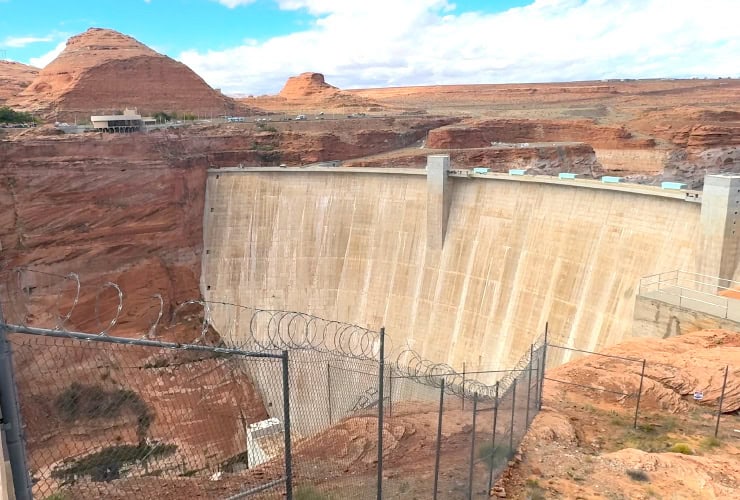
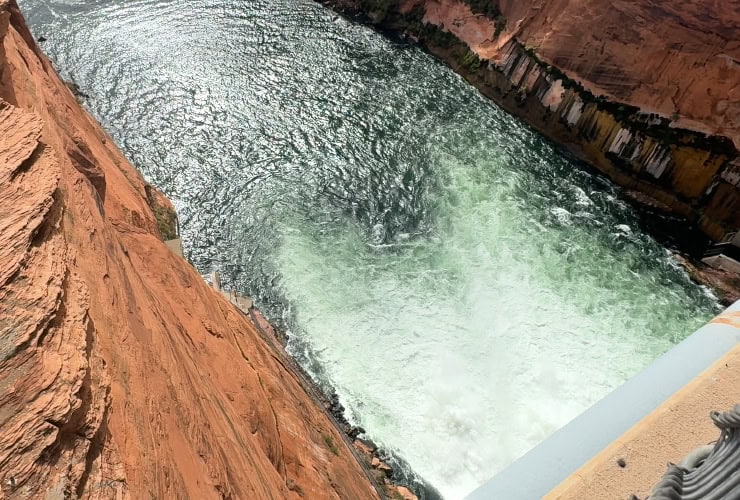
Our last stop before heading back to Phoenix was the Glen Canyon Dam Overlook, offering final, breathtaking canyon views and a look at the massive dam with the Colorado River flowing 700 feet below.
Planning Guide: Accessible Travel Considerations

This trip proved the perfect multi-generational success, demonstrating that a thoughtfully planned itinerary can accommodate everyone, including an enthusiastic 91-year-old.
Based on our experience, here are the core considerations for planning an accessible Southwest road trip:
- When Making Flight Reservations: Be sure to note that your Senior will need wheelchair assistance to the gate. This will also enable you to board first and get situated in your seat prior to main boarding.
- Pack Light and Focus on Essentials: We each travel with just a carry-on and a backpack, which keeps everything simple and manageable. When we need fresh clothes, we do laundry on the road—many hotels, and longer-stay rentals offer machines, and laundromats are easy to find in most cities. Traveling this way makes packing stress-free and allows us to move quickly and comfortably from one destination to the next.
- Plan Shorter Driving Days: Aim for 2-4 hours of driving between stops when possible. Build in breaks every 60-90 minutes for stretching, restroom stops or just a change of scenery.
- Hydration and Altitude Awareness: Parts of the Southwest are higher elevation, which can cause fatigue or dizziness. Keep hydration steady and take it slow on the first day or two at altitude.
- Mind the Heat and Sun: If traveling in warm months, avoid afternoon outdoor activities. Use hats, sunscreen and layers.
- Bring Key Comfort and Medical Items: Medications sorted in a simple, easy-to-read pill organizer. Prepare a list of medications and doctors in case of an emergency. Bring mobility aids such as a trekking pole, cane or walker, even if just for stability on uneven terrain.
- Pace is Everything: Remember that physical limitations relate primarily to speed and stamina. Plan for fewer activities each day and allow plenty of time for rest and unexpected delays.
- Prioritize Accessible Lodging: Every location we chose offered accommodations designed for easy access. Call ahead to confirm ground-floor rooms or easy-access suites.
- The Bus System is Your Friend: At the Grand Canyon, the bus line is the key to almost anywhere you wish to go along the accessible South Rim. All buses have a wheelchair securement area and designated seats for seniors and people with disabilities.
- Look for Paved or Packed-Sand Paths: Many top views are available with minimal walking. For example, the path to Horseshoe Bend is a packed sand path with a gradual downhill grade, and it includes two covered rest stops.
- Leverage Visitor Centers: In parks like Monument Valley and Arches, the Visitor Centers often have the single most spectacular, easily accessible viewing platforms.
- The Car is a Viewpoint: Since the drives themselves are incredibly scenic (as demonstrated on Scenic Byway 12 and the route to Moab), the car becomes a comfortable, accessible viewing platform, allowing older travelers to enjoy the majesty without leaving their seat.

This region of the United States is utterly unique; nowhere else do the forces of nature create such inspiring, vibrant, and monumental artistry. We hope our journey inspires you to commune in nature, no matter your age or physical condition!